The Four Signals.
What is a senior banker listening for beneath an interview answer?
ONE OF EIGHT · FROM HOW BANKERS THINK · FREE · NO SIGNUP
BY MICHAEL SHANG · SIXTEEN YEARS IN COMMERCIAL BANKING · UPDATED
// THE SHORT ANSWER
The Four Signals, from Michael Shang's How Bankers Think, are what a senior banker listens for underneath the printed interview questions: early traces of the Three Questions before they become habit. Credit instinct is a mind that moves first to durability and only then to growth. Structural thinking organises a description by category rather than chronology. Intellectual honesty names the edge of what it knows without bluffing, and coachability revises the view when new information arrives. They are not four separate checks but the disposition that, given time, produces the three questions — which is why an interviewer who could not name them still recognises a candidate who has them.
// THE PARTS
- 01Credit instinct — Moves first to durability, and only then to growth — the early trace of will I get paid back.
- 02Structural thinking — Organises by category and framework, not chronology — the early trace of can I get out if I'm wrong.
- 03Intellectual honesty — Names precisely what it does and does not know — the first half of am I being paid enough: do I know enough to price this risk?
- 04Coachability — Revises the view when new information arrives — the second half: can I revise my pricing as the facts change?
// BASIS
Developed in chapter 2, The Hidden Curriculum, of How Bankers Think: Inside Commercial Banking's Hidden Curriculum (Michael Shang, Highbank Press, 2026; paperback ISBN 978-1-0672833-0-8), from sixteen years in commercial banking. The definition and the parts above are the author's own, taken from the chapter that develops the framework rather than from the book's appendix. It is a practitioner's framework, set out in print and tested on the case files this site publishes — not a regulatory standard, and not a convention borrowed from a textbook.
Adjacent to competency-based interviewing, which scores candidates against separate behaviours; the difference is that the four signals are read as one disposition, so a panel is listening for the temperament beneath the answer rather than ticking four boxes.
“These four signals, taken together, are what senior bankers mean — though they would rarely articulate it this way — when they say of a candidate that “there’s something there” or that “the raw material is right.” The phrases are vague. The underlying assessment is precise.”
Michael Shang, How Bankers Think (Highbank Press, 2026), chapter 2, page 51 of the print edition.
// READ ALONGSIDE
The recognised ground this page sits beside. Each was opened and checked when cited; none is a source for the framework itself.
- US Office of Personnel Management, Assessment & Selection: Structured Interviews — Competency-based interviewing as a government assessment method: questions built on job competencies identified by job analysis, asked in situational or behavioural form, and rated by each panel member — the separate-behaviour scoring the four signals are read beside.
- US Office of Personnel Management, Structured Interviews: A Practical Guide (September 2008) — A structured interview asks every candidate the same questions and scores them on a common rating scale; research consistently finds unstructured interviews of little value in predicting performance.
// WHERE IT SITS
Every framework in the book is a structured way of answering one question — “How do I get my money back, with interest, across cycles?” — through the three questions beneath it. This one serves:
- QUESTION 01 · CREDITWill I get paid back?Cash flows, assets, business model, resilience across cycles.
- QUESTION 02 · PRICING AND STRUCTUREAm I being paid enough for the risk?Whether the spread compensates for the downside the structure cannot price.
- QUESTION 03 · EXITCan I get out if I'm wrong?Covenants, secondary markets, alternative lenders, structural exits.
The framework is developed in chapter 2 of How Bankers Think, The Hidden Curriculum. The short form is in the glossary; the architecture all eight hang from is on the frameworks page.
// WORKED IN
Where this site runs the framework on a file, free and without signup.
// A CASE, READ WITH IT
A composite file — every borrower on this site is constructed — summarised from the page it links to.
The composite interview on this site's guide hands the candidate a borrower and asks what they would do, and the panel is listening rather than marking. Credit instinct is the candidate who goes to the cash flow before praising the growth. Structural thinking is the answer organised as growth, conversion, structure — not as a retelling of the file in the order it was handed over. Intellectual honesty is naming what the file cannot show — the customer terms, the stock that has not sold — instead of bluffing past it. Coachability is what happens when the panel adds a fact that changes the picture, and the candidate changes the read instead of defending it.
// ON THE IN-TRAY
Six one-minute files on Chapter 2, each call read against a senior banker's. The Four Signals on the In-Tray →
// THE OTHER SEVEN
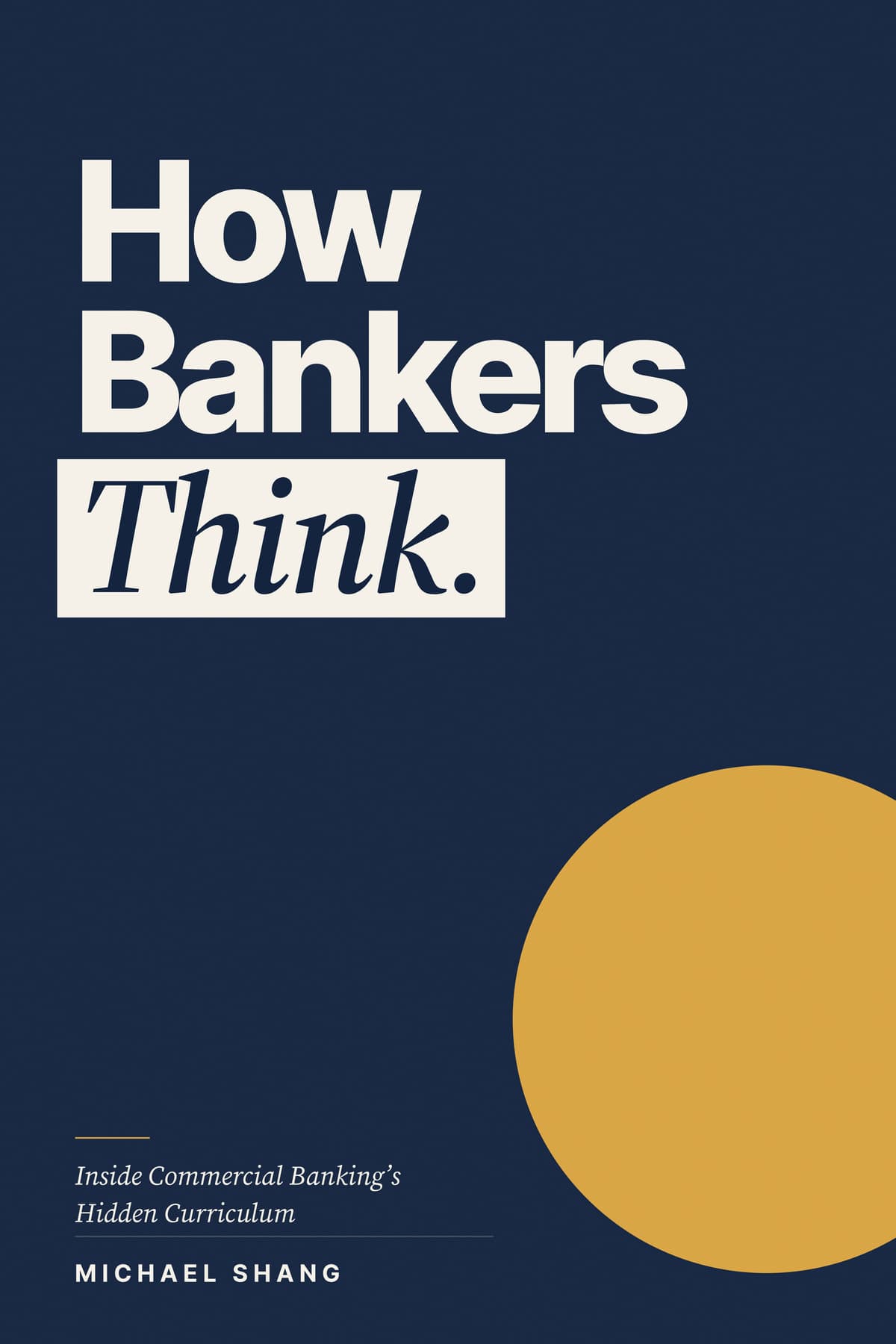
This page is the working form. Chapter 2 is where the framework is developed — where it came from, where it breaks, what a senior banker does when it does, and the cases that turn it from checklist into instinct.

// SUBSCRIBE
The Lab.
One case file and one question, in your inbox every Tuesday morning, New Zealand time. The senior banker's read opens only after you answer.
FREE WITH IT · ANNOTATED PDF
A complete credit paper on a published file, with the approver's notes on what each section has to answer.
No spam. Unsubscribe anytime. Educational content only.