The Three Translations.
Where do a sound business and a lending process most reliably fail to understand each other?
ONE OF EIGHT · FROM HOW BANKERS THINK · FREE · NO SIGNUP
BY MICHAEL SHANG · SIXTEEN YEARS IN COMMERCIAL BANKING · UPDATED
// THE SHORT ANSWER
The Three Translations, from Michael Shang's How Bankers Think, name the three joints between a business and the process that decides whether it gets funded, where reading most often fails. Cycle versus calendar: the business runs on its own rhythm, the bank reviews it on quarter-ends, and a snapshot at the wrong point in the cycle reads as distress. Visible versus actual: documents capture what a business can produce on paper, not the owner judgment, supplier relationships and key staff that carry it through a hard year. Slice versus flow: the bank prices one transaction while the client lives a multi-year relationship of which this request is the next instalment.
// THE PARTS
- 01Cycle versus calendar — The most common. Untranslated, a business read mid-cycle looks like a business in trouble.
- 02Visible versus actual — The deepest. Untranslated, both sides misdiagnose each other — the paper is mistaken for the business.
- 03Slice versus flow — The most underrated. Untranslated, the deal is priced and structured blind to the relationship it belongs to.
// BASIS
Developed in chapter 8, Reading the Room: The Banker as Translator, of How Bankers Think: Inside Commercial Banking's Hidden Curriculum (Michael Shang, Highbank Press, 2026; paperback ISBN 978-1-0672833-0-8), from sixteen years in commercial banking. The definition and the parts above are the author's own, taken from the chapter that develops the framework rather than from the book's appendix. It is a practitioner's framework, set out in print and tested on the case files this site publishes — not a regulatory standard, and not a convention borrowed from a textbook.
Adjacent to relationship banking and to the literature on information asymmetry between borrower and lender; the three translations name the three points where that asymmetry is actually created — the calendar, the documents and the transaction — rather than treating it as a fact of the market.
“Across many years of watching deals progress and stall, I have come to think that translation failure shows up in three characteristic forms, each of which has its own typology and its own remedy. The three forms map onto the three translations the framework section will develop in detail.”
Michael Shang, How Bankers Think (Highbank Press, 2026), chapter 8, page 279 of the print edition.
// READ ALONGSIDE
The recognised ground this page sits beside. Each was opened and checked when cited; none is a source for the framework itself.
- Stiglitz, J. E. and Weiss, A., "Credit Rationing in Markets with Imperfect Information", American Economic Review 71(3), 1981, pp. 393–410 — The canonical statement that lenders ration credit rather than price every risk, because what they cannot see about a borrower they cannot charge for.
- Petersen, M. A. and Rajan, R. G., "The Benefits of Lending Relationships: Evidence from Small Business Data", Journal of Finance 49(1), 1994, pp. 3–37 — Closer ties with a lender raise the availability of credit more than they lower its price — the slice-versus-flow translation, measured.
- Berger, A. N. and Udell, G. F., "Small Business Credit Availability and Relationship Lending: The Importance of Bank Organisational Structure", Economic Journal 112, 2002, pp. F32–F53 — Relationship lending runs on soft information accumulated by the loan officer over time — the visible-versus-actual translation, and who holds it.
- Australian Banking Association, Banking Code of Practice (2025), clause 76 — A bank will say how to apply, what information it needs and, once it has that information, how long a decision is likely to take — the calendar handover, written into an industry code.
// WHERE IT SITS
Every framework in the book is a structured way of answering one question — “How do I get my money back, with interest, across cycles?” — through the three questions beneath it. This one serves:
- QUESTION 01 · CREDITWill I get paid back?Cash flows, assets, business model, resilience across cycles.
- QUESTION 02 · PRICING AND STRUCTUREAm I being paid enough for the risk?Whether the spread compensates for the downside the structure cannot price.
- QUESTION 03 · EXITCan I get out if I'm wrong?Covenants, secondary markets, alternative lenders, structural exits.
The framework is developed in chapter 8 of How Bankers Think, Reading the Room: The Banker as Translator. The short form is in the glossary; the architecture all eight hang from is on the frameworks page.
// WORKED IN
Where this site runs the framework on a file, free and without signup.
// A CASE, READ WITH IT
A composite file — every borrower on this site is constructed — summarised from the page it links to.
Issue 06 is cycle versus calendar with money on it. A retailer whose last Christmas did not clear has increased this year's buy by 22 per cent and asks for its seasonal uplift. Read on the calendar, the request is the same seasonal facility the bank has provided before. Read on the cycle, part of the uplift is not seasonal at all: it is last season's stock, still on the balance sheet, being refinanced as this season's. The senior read separates the two, and notes that weekly reporting through the peak would document a bad Christmas rather than prevent one. The translation the file needed was the bank's, not the borrower's.
// ON THE IN-TRAY
Six one-minute files on Chapter 8, each call read against a senior banker's. The Three Translations on the In-Tray →
// THE OTHER SEVEN
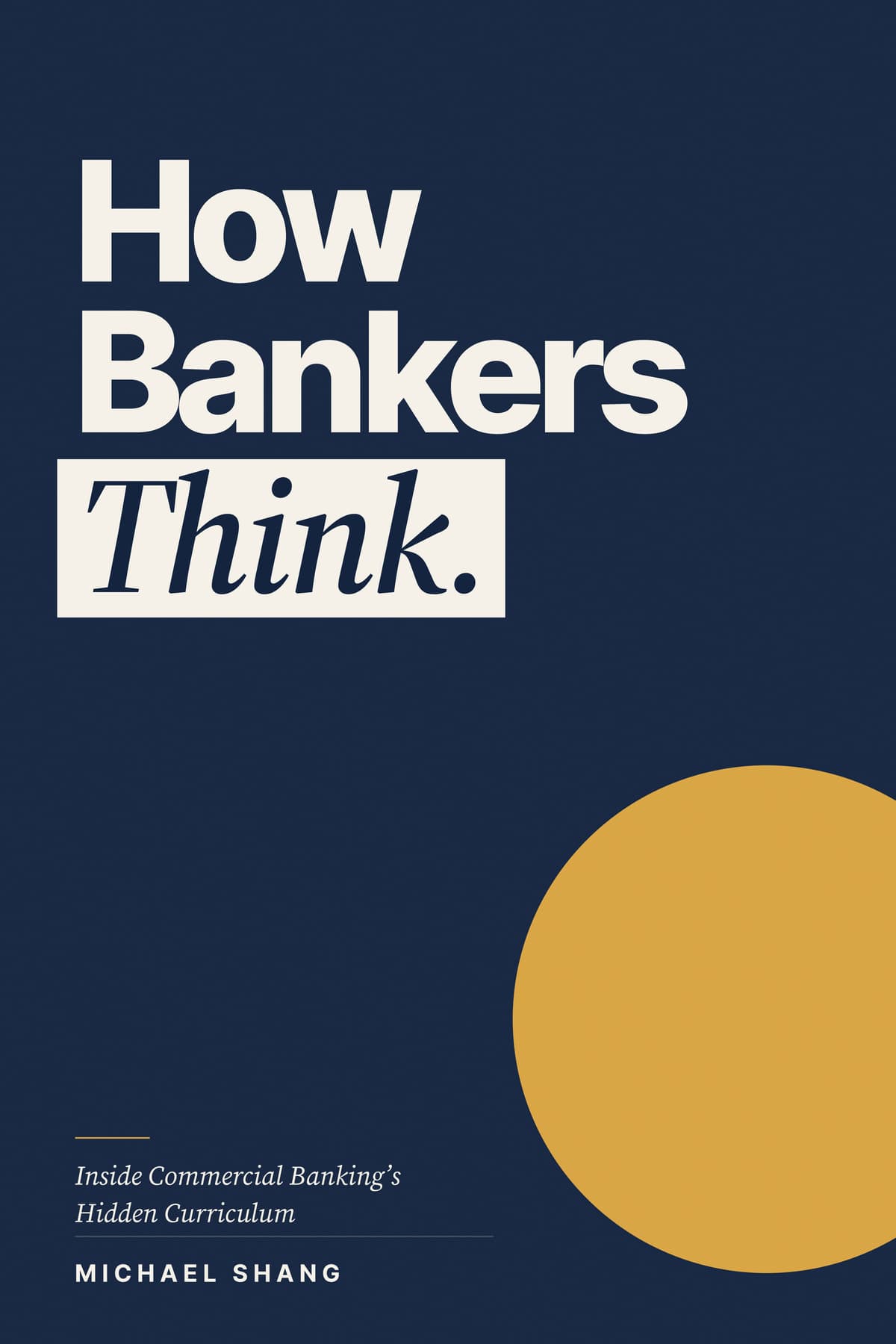
This page is the working form. Chapter 8 is where the framework is developed — where it came from, where it breaks, what a senior banker does when it does, and the cases that turn it from checklist into instinct.

// SUBSCRIBE
The Lab.
One case file and one question, in your inbox every Tuesday morning, New Zealand time. The senior banker's read opens only after you answer.
FREE WITH IT · ANNOTATED PDF
A complete credit paper on a published file, with the approver's notes on what each section has to answer.
No spam. Unsubscribe anytime. Educational content only.