The Three Modes of Watching.
How does early recognition of trouble become a reliable output rather than occasional luck?
ONE OF EIGHT · FROM HOW BANKERS THINK · FREE · NO SIGNUP
BY MICHAEL SHANG · SIXTEEN YEARS IN COMMERCIAL BANKING · UPDATED
// THE SHORT ANSWER
The Three Modes of Watching, from Michael Shang's How Bankers Think, are three forms of attention held continuously across a portfolio, so that trouble registers while there are still options. Pattern watching holds a baseline for each borrower clearly enough that small departures register before any one is large. Coupling watching reads the relationships between variables, so a decoupling shows while each is still inside its normal range. Silence watching attends to what has stopped arriving — the late report, the unreturned call — and treats absence as information. The banker who sees trouble at twelve months has choices the banker who sees it at three does not.
// THE PARTS
- 01Pattern watching — Single variables, across time. Requires memory and recognition — the rhythm, and the deviation from it.
- 02Coupling watching — The relationships between variables, at any time. Requires structural thinking — revenue and receivables decoupling, a CFO's tone not matching the operational story.
- 03Silence watching — What is not happening at all. Requires deliberate attention — covenant certificates in a changed format, the calls that stopped being made.
RULING Each mode catches what the others miss. Run together, they produce the attuned attention.
// BASIS
Developed in chapter 6, Spotting Trouble Before It Spots You, of How Bankers Think: Inside Commercial Banking's Hidden Curriculum (Michael Shang, Highbank Press, 2026; paperback ISBN 978-1-0672833-0-8), from sixteen years in commercial banking. The definition and the parts above are the author's own, taken from the chapter that develops the framework rather than from the book's appendix. It is a practitioner's framework, set out in print and tested on the case files this site publishes — not a regulatory standard, and not a convention borrowed from a textbook.
Adjacent to early-warning systems in bank credit risk management — receivables ageing, covenant tests, utilisation triggers — and to the monitoring rhythm of annual reviews; the three modes describe the human attention those systems depend on, and the third mode, silence, is the one no system reports because nothing has arrived.
“The three modes of watching — pattern watching, coupling watching, silence watching — are not three applications of a single underlying skill. They are three quite different cognitive activities, and the bankers who become good at all three have, in some sense, trained three separate forms of attention.”
Michael Shang, How Bankers Think (Highbank Press, 2026), chapter 6, page 198 of the print edition.
// READ ALONGSIDE
The recognised ground this page sits beside. Each was opened and checked when cited; none is a source for the framework itself.
- European Banking Authority, Guidelines on loan origination and monitoring (EBA/GL/2020/06), section 8.5, paragraphs 269–272 — Institutions should maintain quantitative and qualitative early warning indicators with trigger levels, escalation procedures and a watch list, and apply more frequent monitoring when one trips — the system the three modes of attention feed.
- APRA, Prudential Standard APS 220 Credit Risk Management, paragraphs 64 and 80 (in force from 1 January 2023) — Monitoring the condition of individual exposures, and a workout function segregated from the area that originated the exposure — the escalation path watching leads into.
- APRA, Prudential Practice Guide APG 220 Credit Risk Management (current from 1 January 2022), paragraphs 66–67 and 88–89 — A prudent bank develops forward-looking indicators of loan quality and does not rely solely on arrears and other lagging metrics; watch-lists and a remedial process with defined triggers are the machinery — the regulator's version of watching before the numbers turn.
- OCC, Comptroller's Handbook: Lending and Loan Portfolio Risk Management, version 1.0 (July 2026) — Problem Loan Management — Even a soundly underwritten, properly monitored loan can deteriorate; the stated aim is to identify weaknesses and adverse trends at the earliest possible stage, with orderly repayment the goal and legal action the last resort.
// WHERE IT SITS
Every framework in the book is a structured way of answering one question — “How do I get my money back, with interest, across cycles?” — through the three questions beneath it. This one serves:
- QUESTION 03 · EXITCan I get out if I'm wrong?Covenants, secondary markets, alternative lenders, structural exits.
The framework is developed in chapter 6 of How Bankers Think, Spotting Trouble Before It Spots You. The short form is in the glossary; the architecture all eight hang from is on the frameworks page.
// WORKED IN
Where this site runs the framework on a file, free and without signup.
// A CASE, READ WITH IT
A composite file — every borrower on this site is constructed — summarised from the page it links to.
The composite on this site's credit-risk guide runs the three modes on one file. Pattern: receivables that have aged a little further in each of three quarters — no single quarter alarming, the line unmistakable. Coupling: revenue still growing while operating cash flow has stopped following it, each number inside its own normal range. Silence: management accounts that used to arrive on time now arrive later each quarter, and a finance director who has stopped calling. None of the three trips a covenant. Together they move the file from routine to the watchlist while the bank still has options, which is the whole point of watching.
// ON THE IN-TRAY
Six one-minute files on Chapter 6, each call read against a senior banker's. The Three Modes of Watching on the In-Tray →
// THE OTHER SEVEN
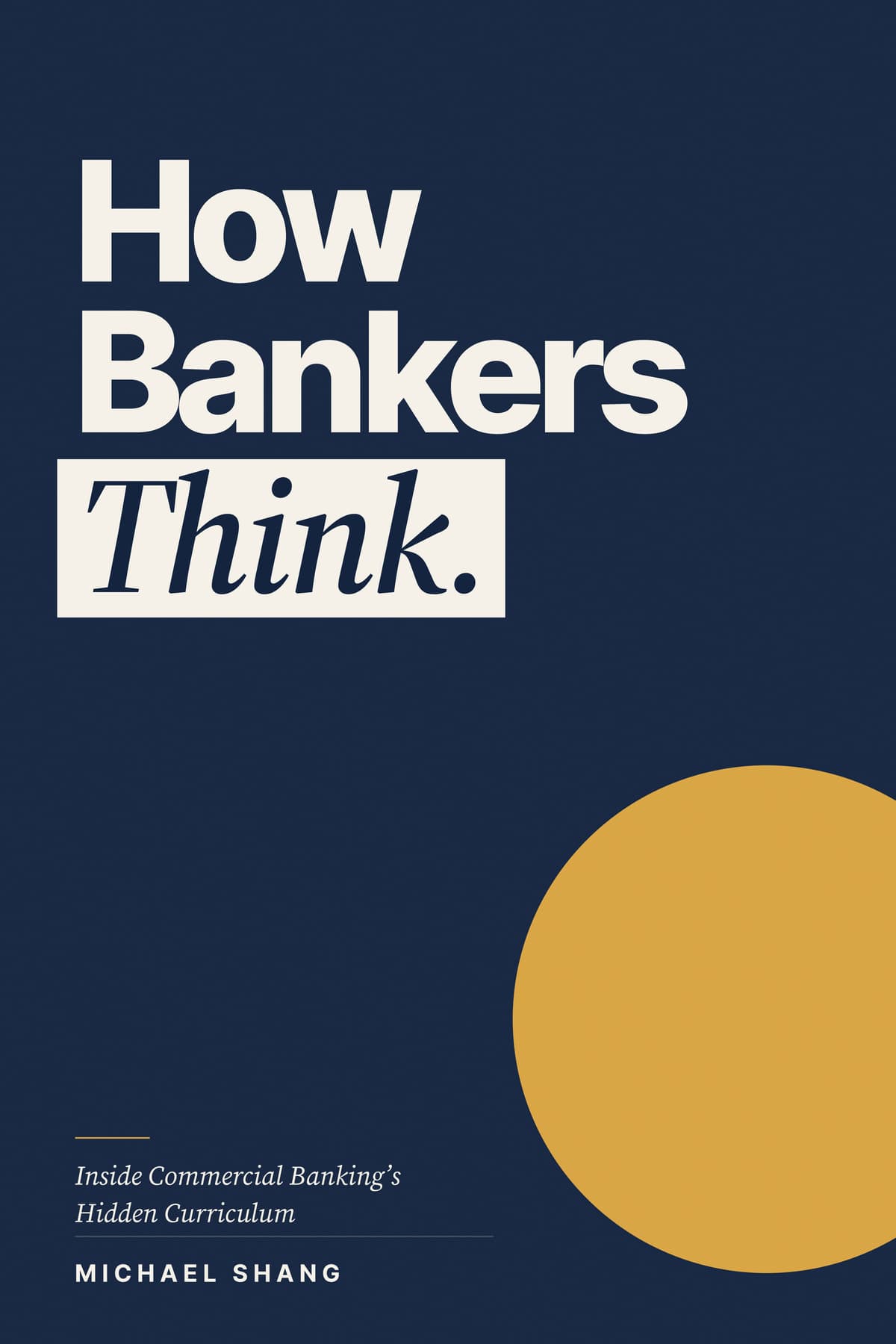
This page is the working form. Chapter 6 is where the framework is developed — where it came from, where it breaks, what a senior banker does when it does, and the cases that turn it from checklist into instinct.

// SUBSCRIBE
The Lab.
One case file and one question, in your inbox every Tuesday morning, New Zealand time. The senior banker's read opens only after you answer.
FREE WITH IT · ANNOTATED PDF
A complete credit paper on a published file, with the approver's notes on what each section has to answer.
No spam. Unsubscribe anytime. Educational content only.