The Walk-Away Framework.
How does a banker reach a no they can defend, rather than declining on discomfort or proceeding on momentum?
ONE OF EIGHT · FROM HOW BANKERS THINK · FREE · NO SIGNUP
BY MICHAEL SHANG · SIXTEEN YEARS IN COMMERCIAL BANKING · UPDATED
// THE SHORT ANSWER
The Walk-Away Framework, from Michael Shang's How Bankers Think, converts the instinct to decline into a defensible, communicable decision. Its first half is a typology — four scenarios a banker actually meets, each calling for a different conversation: a counter-proposal, a deferral, a clean exit, or a pass. Its second half is four self-tests run before committing, in a sequence that gets harder as it goes. It exists because a career in credit is shaped more by what is declined than what is approved, and because the hardest declines are not the weak files but the ones where a deadline, a long relationship or pipeline pressure is doing the arguing.
// THE PARTS
- 01Right deal, wrong structure — Counter with the structure the bank can do. The most common scenario, and the one that most often ends in a deal rather than a decline.
- 02Right business, wrong moment — Defer, and mean it. The warning signs are outside the borrower — the cycle, the regulator, the bank's own concentration.
- 03Right credit, wrong relationship — Decline and end the file cleanly. Behaviour during the courtship is a fair preview of behaviour under stress.
- 04Right everything, wrong bank — Pass. The deal is good, but not for this bank's hold limit, sector depth or expertise — and ask why it reached your desk.
- 05Self-test 1 · the credit-committee defence — If this goes wrong eighteen months from now, can I defend today's decision in front of the committee?
- 06Self-test 2 · courtship as preview — Is this client's behaviour now a fair preview of how they will behave in a stress event?
- 07Self-test 3 · the right lender — Am I the right lender for this deal — or just the available one?
- 08Self-test 4 · the right banker — Am I, at this point in my career, the right banker for this client?
// BASIS
Developed in chapter 7, The Deal You Don't Do, of How Bankers Think: Inside Commercial Banking's Hidden Curriculum (Michael Shang, Highbank Press, 2026; paperback ISBN 978-1-0672833-0-8), from sixteen years in commercial banking. The definition and the parts above are the author's own, taken from the chapter that develops the framework rather than from the book's appendix. It is a practitioner's framework, set out in print and tested on the case files this site publishes — not a regulatory standard, and not a convention borrowed from a textbook.
Adjacent to credit-committee decline discipline and to the negotiation idea of a walk-away point; the framework's contribution is the typology — four different declines that call for four different conversations — and the four self-tests a banker runs on their own motives before committing.
“The framework has two parts. First, the four scenarios — the typology of walk-away situations a banker actually encounters. Second, the four self-tests — the questions a banker runs internally before committing to the call. Together, they convert the instinct to walk away into a defensible, communicable decision.”
Michael Shang, How Bankers Think (Highbank Press, 2026), chapter 7, page 241 of the print edition.
// READ ALONGSIDE
The recognised ground this page sits beside. Each was opened and checked when cited; none is a source for the framework itself.
- APRA, Prudential Standard APS 220 Credit Risk Management, paragraph 41 (in force from 1 January 2023) — The standard asks for experienced credit judgement in a scalable, flexible assessment — the decline is where that judgement is exercised rather than delegated to a scorecard.
- Basel Committee on Banking Supervision, Principles for the management of credit risk (BIS, April 2025) — The credit-granting process the framework's four scenarios operate inside; the self-tests are what a committee defence looks like from the banker's chair.
- Australian Banking Association, Banking Code of Practice (2025), clause 81 — If a bank decides not to approve a loan it will tell the customer the general reason why, unless it is reasonable not to — the code's version of a no that can be communicated, which is what the framework exists to produce.
- New Zealand Banking Association, Code of Banking Practice — 'We will act responsibly if we offer or provide you with credit' — Subscribing New Zealand banks commit to lend only where satisfied the customer is likely to make repayments without substantial hardship — the decline as a responsibility owed to the borrower, not only to the bank.
// WHERE IT SITS
Every framework in the book is a structured way of answering one question — “How do I get my money back, with interest, across cycles?” — through the three questions beneath it. This one serves:
- QUESTION 01 · CREDITWill I get paid back?Cash flows, assets, business model, resilience across cycles.
- QUESTION 02 · PRICING AND STRUCTUREAm I being paid enough for the risk?Whether the spread compensates for the downside the structure cannot price.
- QUESTION 03 · EXITCan I get out if I'm wrong?Covenants, secondary markets, alternative lenders, structural exits.
The framework is developed in chapter 7 of How Bankers Think, The Deal You Don't Do. The short form is in the glossary; the architecture all eight hang from is on the frameworks page.
// WORKED IN
Where this site runs the framework on a file, free and without signup.
// A CASE, READ WITH IT
A composite file — every borrower on this site is constructed — summarised from the page it links to.
Issue 01 is the first scenario — right deal, wrong structure — played out. Pacific Premium Foods is a real business with real growth, and the facility increase it asks for would fund the deterioration in its cycle rather than the growth. Declining the request as framed and proposing a different structure is not declining the borrower; it is the counter-proposal the scenario calls for. The first self-test decides it: if this file goes wrong eighteen months from now, an approval as requested cannot be defended in front of the committee, and a counter that funds the growth and names the drift can.
// ON THE IN-TRAY
Six one-minute files on Chapter 7, each call read against a senior banker's. The Walk-Away Framework on the In-Tray →
// THE OTHER SEVEN
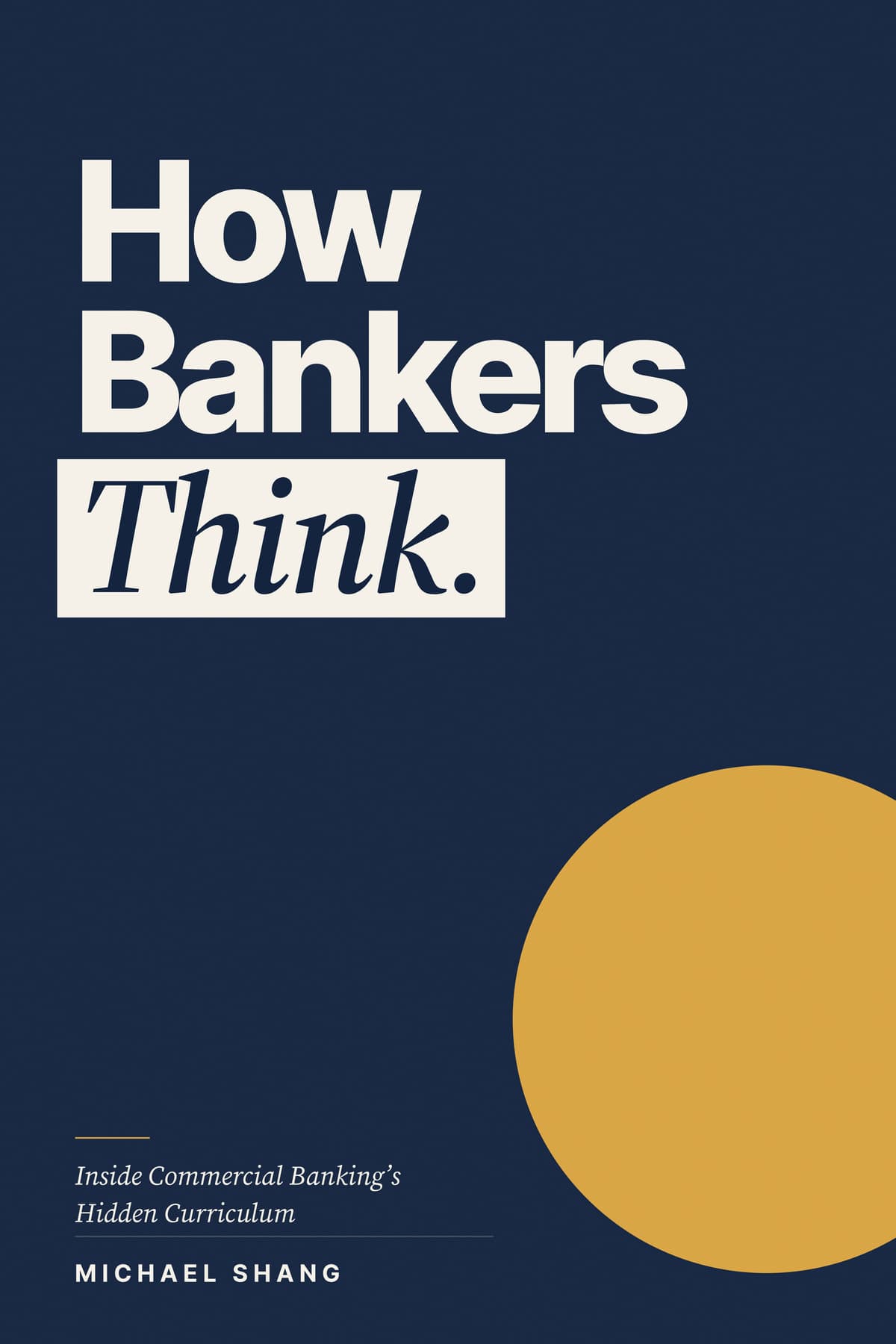
This page is the working form. Chapter 7 is where the framework is developed — where it came from, where it breaks, what a senior banker does when it does, and the cases that turn it from checklist into instinct.

// SUBSCRIBE
The Lab.
One case file and one question, in your inbox every Tuesday morning, New Zealand time. The senior banker's read opens only after you answer.
FREE WITH IT · ANNOTATED PDF
A complete credit paper on a published file, with the approver's notes on what each section has to answer.
No spam. Unsubscribe anytime. Educational content only.