The Three Questions.
What is every credit decision actually deciding?
ONE OF EIGHT · FROM HOW BANKERS THINK · FREE · NO SIGNUP
BY MICHAEL SHANG · SIXTEEN YEARS IN COMMERCIAL BANKING · UPDATED
// THE SHORT ANSWER
The Three Questions, from Michael Shang's How Bankers Think, are the whole of commercial banking judgment stated before any technique: will I get paid back, am I being paid enough for the risk, and can I get out if I am wrong. They are the working form of the one question underneath every banking decision — how do I get my money back, with interest, across cycles. Every other framework in the book is one of the three applied to a particular moment. Senior bankers do not run them in sequence; after enough years the three fuse into a single read, which is what the book means by temperament.
// THE PARTS
- 01Will I get paid back? — Credit. Cash flows, assets, business model, resilience across cycles.
- 02Am I being paid enough for the risk? — Pricing and structure. Whether the spread compensates for the downside the structure cannot price.
- 03Can I get out if I'm wrong? — Exit. Covenants, secondary markets, alternative lenders, structural exits.
// BASIS
Developed in chapter 1, Why Bankers Think Differently, of How Bankers Think: Inside Commercial Banking's Hidden Curriculum (Michael Shang, Highbank Press, 2026; paperback ISBN 978-1-0672833-0-8), from sixteen years in commercial banking. The definition and the parts above are the author's own, taken from the chapter that develops the framework rather than from the book's appendix. It is a practitioner's framework, set out in print and tested on the case files this site publishes — not a regulatory standard, and not a convention borrowed from a textbook.
Adjacent to the textbook five Cs of credit — character, capacity, capital, collateral, conditions — which list what to look at; the Three Questions state what the looking is for, and put pricing and exit beside repayment rather than after it.
“The three questions, taken together, are the underlying structure of every credit decision in commercial banking. They are not, in any single banker’s day, asked in this explicit form — by year five, they are asked instinctively, in milliseconds, woven into how the banker reads any new file. But the instinct is built on the explicit version.”
Michael Shang, How Bankers Think (Highbank Press, 2026), chapter 1, page 16 of the print edition.
// READ ALONGSIDE
The recognised ground this page sits beside. Each was opened and checked when cited; none is a source for the framework itself.
- Basel Committee on Banking Supervision, Principles for the management of credit risk (BIS, April 2025) — The supervisory statement of the same ground: a sound credit-granting process, credit administration and monitoring, and controls — the three questions are the banker's-desk form of it.
- APRA, Prudential Standard APS 220 Credit Risk Management, paragraphs 41–42 (in force from 1 January 2023) — Credit risk is to be assessed primarily on the borrower's repayment capacity, with experienced credit judgement and without undue reliance on collateral — the first question, stated as a rule for Australian banks.
- OCC, Comptroller's Handbook: Lending and Loan Portfolio Risk Management, version 1.0 (July 2026) — Credit Underwriting, quoting 12 CFR 30 appendix A — US supervisory practice puts it in one line: identify the purpose of a loan and the source of repayment, and assess the ability of the borrower to repay in a timely manner — the first question as an examiner reads it.
- Australian Banking Association, Banking Code of Practice (effective 28 February 2025), clauses 77–78 — An industry code with the force of contract for subscribing banks: a new loan is assessed with the care and skill of a diligent and prudent banker, on the customer's financial position or account conduct and, where relevant, projected future cash flows.
// WHERE IT SITS
Every framework in the book is a structured way of answering one question — “How do I get my money back, with interest, across cycles?” — through the three questions beneath it. This one serves:
- QUESTION 01 · CREDITWill I get paid back?Cash flows, assets, business model, resilience across cycles.
- QUESTION 02 · PRICING AND STRUCTUREAm I being paid enough for the risk?Whether the spread compensates for the downside the structure cannot price.
- QUESTION 03 · EXITCan I get out if I'm wrong?Covenants, secondary markets, alternative lenders, structural exits.
The framework is developed in chapter 1 of How Bankers Think, Why Bankers Think Differently. The short form is in the glossary; the architecture all eight hang from is on the frameworks page.
// WORKED IN
Where this site runs the framework on a file, free and without signup.
// A CASE, READ WITH IT
A composite file — every borrower on this site is constructed — summarised from the page it links to.
Issue 05 on this site is the three questions asked of one file. A logistics business asks for expansion funding, and one customer is now 58 per cent of its revenue. Will I get paid back — by a borrower whose cash flow is one counterparty's decision. Am I being paid enough — for a contract with a 90-day break clause that no spread prices. Can I get out — when the assets being financed are dedicated to that customer, and the diversification covenant on offer is a promise the borrower cannot keep. The senior read turns on the third: what the bank would actually be underwriting is the customer's clause, not the borrower's plan.
// ON THE IN-TRAY
Six one-minute files on Chapter 1, each call read against a senior banker's. The Three Questions on the In-Tray →
// THE OTHER SEVEN
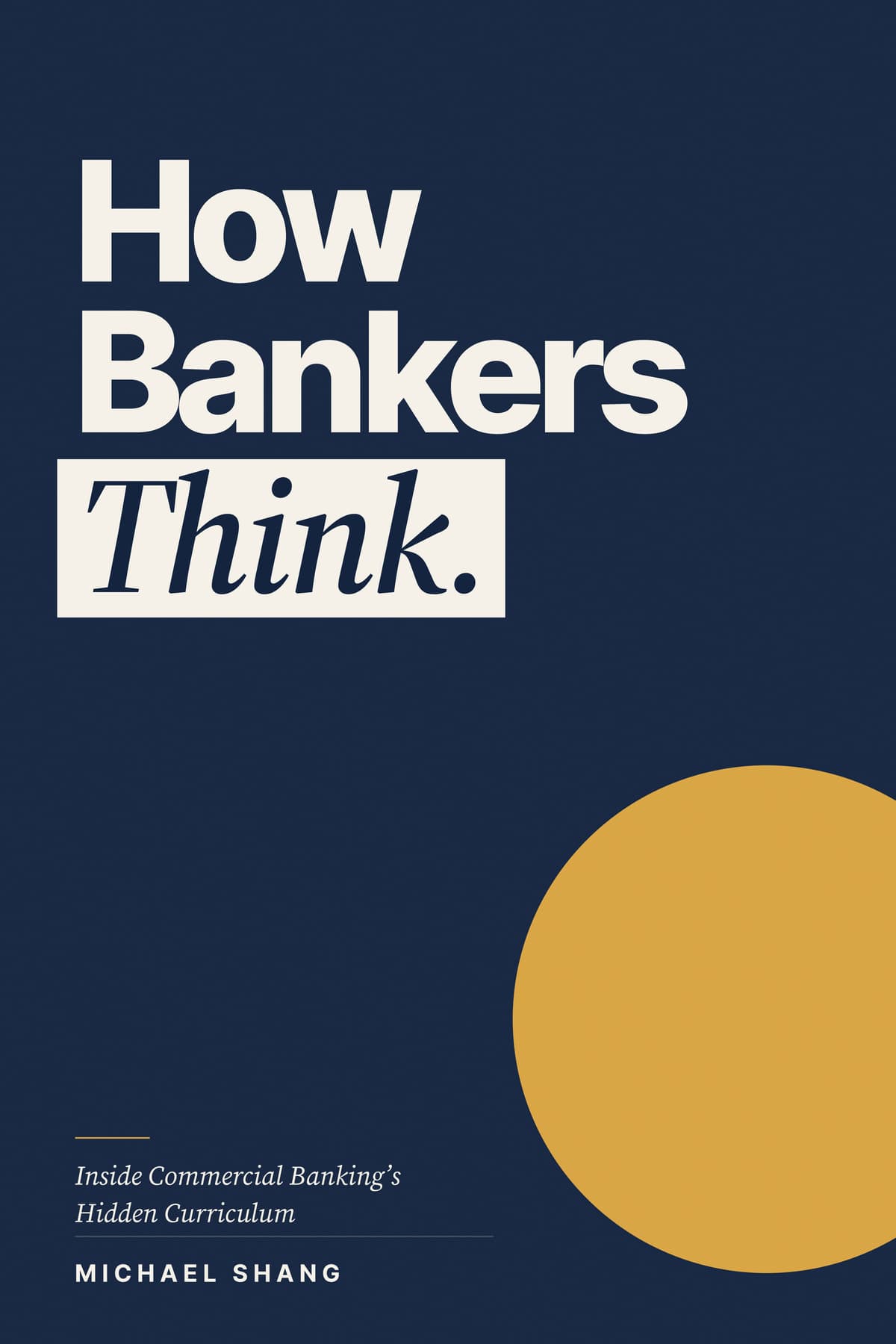
This page is the working form. Chapter 1 is where the framework is developed — where it came from, where it breaks, what a senior banker does when it does, and the cases that turn it from checklist into instinct.

// SUBSCRIBE
The Lab.
One case file and one question, in your inbox every Tuesday morning, New Zealand time. The senior banker's read opens only after you answer.
FREE WITH IT · ANNOTATED PDF
A complete credit paper on a published file, with the approver's notes on what each section has to answer.
No spam. Unsubscribe anytime. Educational content only.